2026-09-21 · Alex Rivera
Commercial Handrail Code Requirements in Phoenix
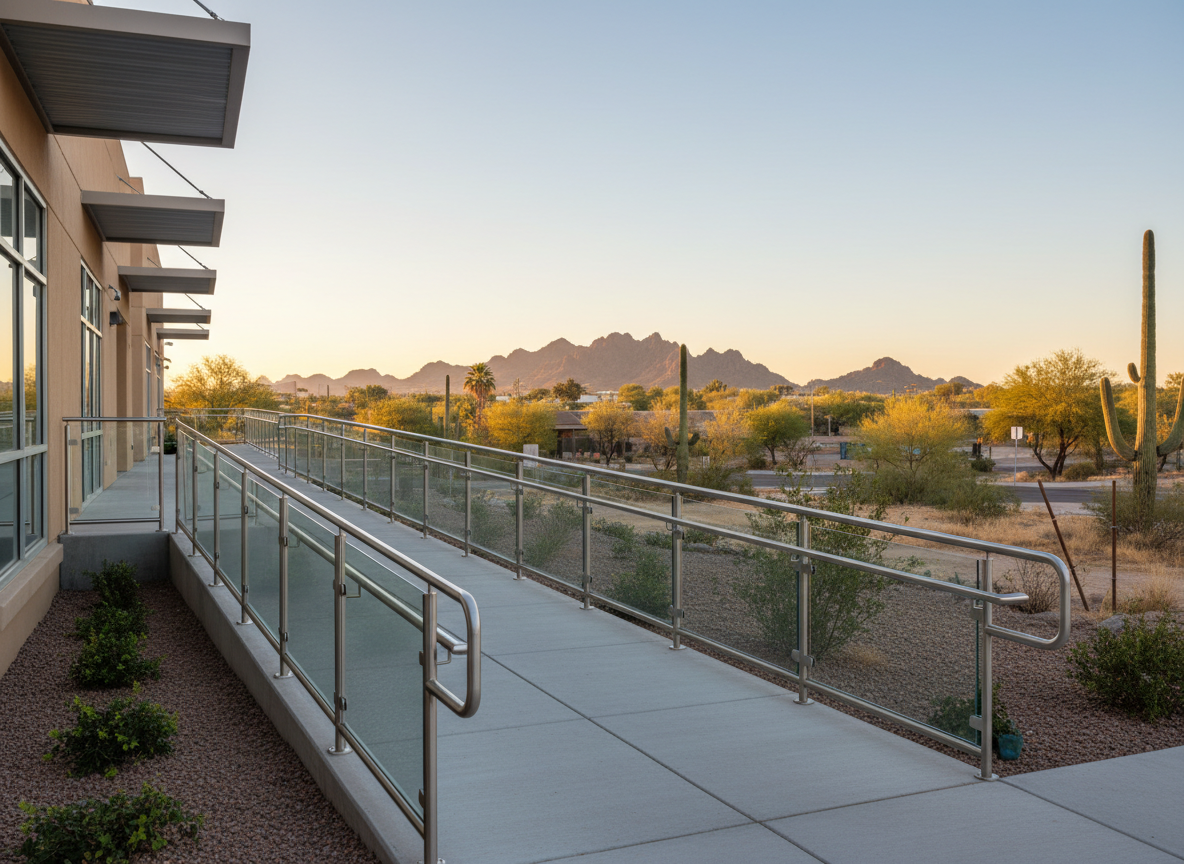
Phoenix commercial handrail installations must follow the International Building Code as adopted by Maricopa County, with handrail heights set between 34 and 38 inches above the nosing of stairs or walking surfaces. These dimensions ensure consistent graspability across projects in neighborhoods such as Ahwatukee and Camelback East where commercial properties range from mid-century offices to newer retail centers. Local inspectors also enforce a 1.25 to 2 inch diameter or equivalent perimeter for round or oval shapes along with a 42 inch minimum guardrail height where drops exceed 30 inches. The hot desert climate adds extra scrutiny on expansion joints and fastener corrosion because summer temperatures routinely exceed 110 degrees and cause metal to shift.
Maricopa County Code Adoption and Local Amendments
Maricopa County enforces the 2018 International Building Code with specific Phoenix amendments that address wind loads and thermal movement in commercial settings. Projects in South Mountain or Maryvale often involve older tilt-up concrete buildings where existing stair widths and stringer spacing require custom bracket spacing to meet the 200 pound concentrated load requirement at the top of the rail. Inspectors check for proper return extensions at the bottom of stairs and continuous rails on both sides of ramps. The county also references the International Existing Building Code for renovations, which can trigger upgrades when occupancy changes occur in buildings near Papago Park or the Phoenix Zoo. These rules differ slightly from Scottsdale and Tempe enforcement, so contractors verify the exact jurisdiction before bidding.
Height, Clearance, and Graspability Standards
Commercial handrails in Phoenix must maintain a minimum 34 inch height and maximum 38 inch height measured vertically from the stair nosing or ramp surface. A clear space of 1.5 inches is required between the rail and any adjacent wall or obstruction to allow full hand wrap. Graspability rules limit the cross-section to shapes that permit a 2 inch minimum finger recess on both sides. In practice this means many stainless steel railings installed on Camelback Mountain view properties use 1.5 inch schedule 40 pipe because it meets the perimeter measurement without sharp edges. For ramps serving buildings in Arcadia, the code also requires an intermediate rail at 18 inches above the surface when the ramp exceeds certain widths. These measurements are verified on site with a level and tape rather than relying solely on manufacturer drawings.
Material and Fastener Performance in Desert Heat
Extreme summer heat in Phoenix accelerates expansion and contraction cycles that can loosen fasteners on commercial handrails within a few seasons. Stainless steel railings perform better than painted steel in this environment because they resist corrosion from monsoon moisture and alkaline soil dust common around Desert Botanical Garden and Chase Field. The code requires all exposed fasteners to be stainless or hot-dip galvanized with neoprene isolators where aluminum and steel meet. In areas like Tempe and Mesa, where many medical office buildings sit on expansive clay soils, posts must be anchored with epoxy into concrete rather than wedge anchors that can pull out during thermal movement. Proper material selection also reduces long-term maintenance calls during the peak heat months when crews prefer to work before 8am.
Installation Practices for Common Phoenix Building Types
Many commercial properties in Biltmore and Arcadia feature concrete or CMU stair towers that require through-bolt attachments rather than surface-mounted brackets to achieve the required 200 pound load rating. When retrofitting older retail centers in Maryvale, crews often sister new stringers to existing ones to maintain code-compliant rail heights without altering the original structure. Ramps near the Phoenix Zoo and Papago Park frequently need custom curved sections to follow site grades while keeping the 34-38 inch height consistent. Every installation includes a final torque check on all bolts and a pull test on at least one anchor per run before the inspector arrives. These steps help ensure the railings remain secure through repeated 110-plus degree days and occasional high-wind events.
Business hours for Phoenix Handrail Pros are Mon–Fri 8am–6pm and Sat 9am–2pm. For projects involving commercial handrails ADA or stainless steel railings in Phoenix and nearby Scottsdale, early coordination with the building department prevents delays during permit review.